

Shutdown Scrubs: How Political Poker is Leaving Nurses—and Patients—High and Dry
October 3, 2025
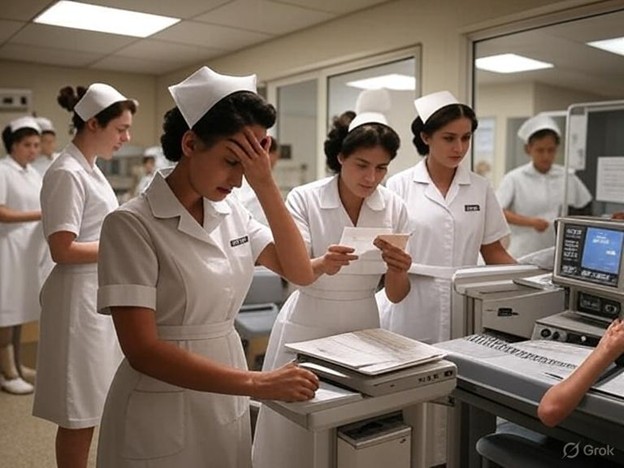
It’s 2 a.m. in the ER. The monitors beep nonstop, a preterm baby’s cries fill the air, and you’re triaging a mother who’s scared she’ll lose her healthcare coverage. Your shift was supposed to end an hour ago, but you’re still here—because that’s what nurses do. Meanwhile, in Washington, D.C., politicians are playing poker with the federal budget, and the chips on the table are your paycheck, your patients’ care, and the stability of the healthcare system you keep running. Welcome to Day 3 of the 2025 government shutdown, where nurses are once again caught in the crossfire of political gridlock.
As the government grinds to a halt over disputes about Affordable Care Act (ACA) subsidies and federal spending, nurses across the country are preparing for the fallout. Delayed Medicaid payments, furloughed health agency staff, and threatened programs like WIC (Women, Infants, and Children) are more than just headlines—they’re real pressures adding to your already overextended shifts. At TradNurse, we believe in the timeless values of nursing: compassion, resilience, and putting patients first. So, let’s cut through the political noise and discuss what this shutdown means for you—and how we can stay in our scrubs and keep our spirits strong.
The Political Mess: Why Nurses Are Paying the Price
The current shutdown, which began on October 1, 2025, results from Congress’s failure to pass a continuing resolution to fund the government for fiscal year 2026. Democrats are advocating for the extension of enhanced ACA subsidies—set to expire this year—that keep premiums affordable for millions, especially in red states, where 60% of subsidy recipients reside (Kaiser Family Foundation, 2025). Republicans, led by figures like Vice President JD Vance, argue these subsidies inflate costs and indirectly support healthcare for undocumented immigrants, calling it a “Schumer Shutdown” (Vance, 2025). The outcome? A deadlock that has frozen $7.6 billion in WIC funding, furloughed non-essential Health and Human Services (HHS) staff, and delayed Medicaid claims processing (Congressional Budget Office, 2025).
For nurses, this isn’t just a news headline. It’s a direct blow. Hospitals in states like Pennsylvania and New York—home to 15% of federal workers—are facing service cuts as reimbursements stall (U.S. Office of Personnel Management, 2025). Rural clinics, already stretched thin, are reducing hours or supplies. And WIC’s shortfall means more malnourished children will land in your pediatric ward, tugging at your heart and your schedule. A recent poll shows that 62% of Americans blame polarization for crises like this, and nurses experience that frustration firsthand (New York Times/Siena College, 2025). While D.C. argues, you’re the one holding the IV line.
Nurses in the Crossfire: Burnout Meets Budget Cuts
Let’s be honest: Nursing was already tough before the shutdown. Over half of U.S. nurses—52%—plan to leave the profession by 2026, citing burnout, understaffing, and feeling undervalued (Reuters, 2025). The shutdown makes it worse. Delayed federal payments could mean hospitals freeze hiring or implement unpaid furloughs, forcing you to take on extra shifts. In urban ERs, you’re already dealing with supply shortages—last week, a colleague told me she reused PPE because stock was low. Rural nurses? You’re driving hours to cover clinics that can’t afford lights. And when uninsured patients flood in because ACA subsidies lapse, you’re forced to make gut-wrenching decisions about who gets care.
I’ve heard your stories: 16-hour shifts with no hazard pay, praying your own kids don’t get sick because your insurance is stretched thin, or watching a patient cry because they can’t afford meds. This isn’t new—COVID revealed how far nurses will go—but it’s a stark reminder of why you chose this profession. You’re not here for the applause or politics. You’re here because, like Florence Nightingale, you believe in healing bodies, no matter the chaos. Yet, when budgets strain and politicians point fingers, it’s your compassion that’s tested the most.
A Traditional Path Forward: Healing Amid the Storm
So, what do we do? First, let’s summon that Nightingale grit. Here are three ways to navigate this shutdown as a TradNurse:
- Advocate Locally: Call your representatives to demand specific healthcare funding—WIC and Medicaid aren’t “extras”; they’re lifelines. A quick call or email (find your rep at house.gov) takes five minutes and boosts our voice.
- Protect Your Spirit: Embrace traditions that ground you. Whether it’s a quiet prayer before a shift, a family dinner, or a walk to clear your mind, these rituals restore your strength for the fight.
- Support Each Other: Share your stories in nurse forums or on X with #ShutdownScrubs. When a colleague in Ohio posted about reusing syringes, it sparked a local fundraiser. Your voice matters.
The shutdown will end—maybe in days, maybe weeks—but our calling doesn’t. At TradNurse, we believe nursing isn’t just a job; it’s a vow to heal, serve, and stand firm. So, let’s keep our scrubs on, our hearts open, and our focus on the patients who need us most. America’s counting on us, one shift at a time.
What’s your shutdown story? Has it hit your unit yet? Please drop a comment or vote in our poll below!
References
Congressional Budget Office. (2025). Federal funding implications for WIC and health programs: October 2025 shutdown analysis. https://www.cbo.gov/publication/2025-shutdown
Kaiser Family Foundation. (2025). ACA subsidy expiration: State-by-state impacts. https://www.kff.org/health-reform/aca-subsidy-2025
New York Times/Siena College. (2025). National poll on government shutdown perceptions. https://www.nytimes.com/2025/09/30/us/politics/siena-poll-shutdown
Reuters. (2025). U.S. nursing workforce trends: Burnout and retention 2025. https://www.reuters.com/health/nursing-shortage-2025
U.S. Office of Personnel Management. (2025). Federal workforce distribution by state. https://www.opm.gov/data/federal-employment-2025
Vance, J. D. [@JDVance]. (2025, October 1). Schumer’s shutdown is a disgrace—fungible funds shouldn’t prop up bad policy. #AmericaFirst [Post]. X. https://x.com/JDVance/status/2025-10-01